How to Play Ghashim (مين الغشيم): Full Rules, Setup & Tips
Last updated:
Ghashim takes about a minute to learn and a single round runs 5–15 minutes, so it fits into any game night. Here is the complete rundown of how a round works, from setup to the final vote — plus a full worked example, exactly how voting and scoring work, the mistakes new groups make most often, and a few rule variants once your group has the basics down.
Steps
- Gather 3 to 20 players in one room, or start an online room if you are playing across devices.
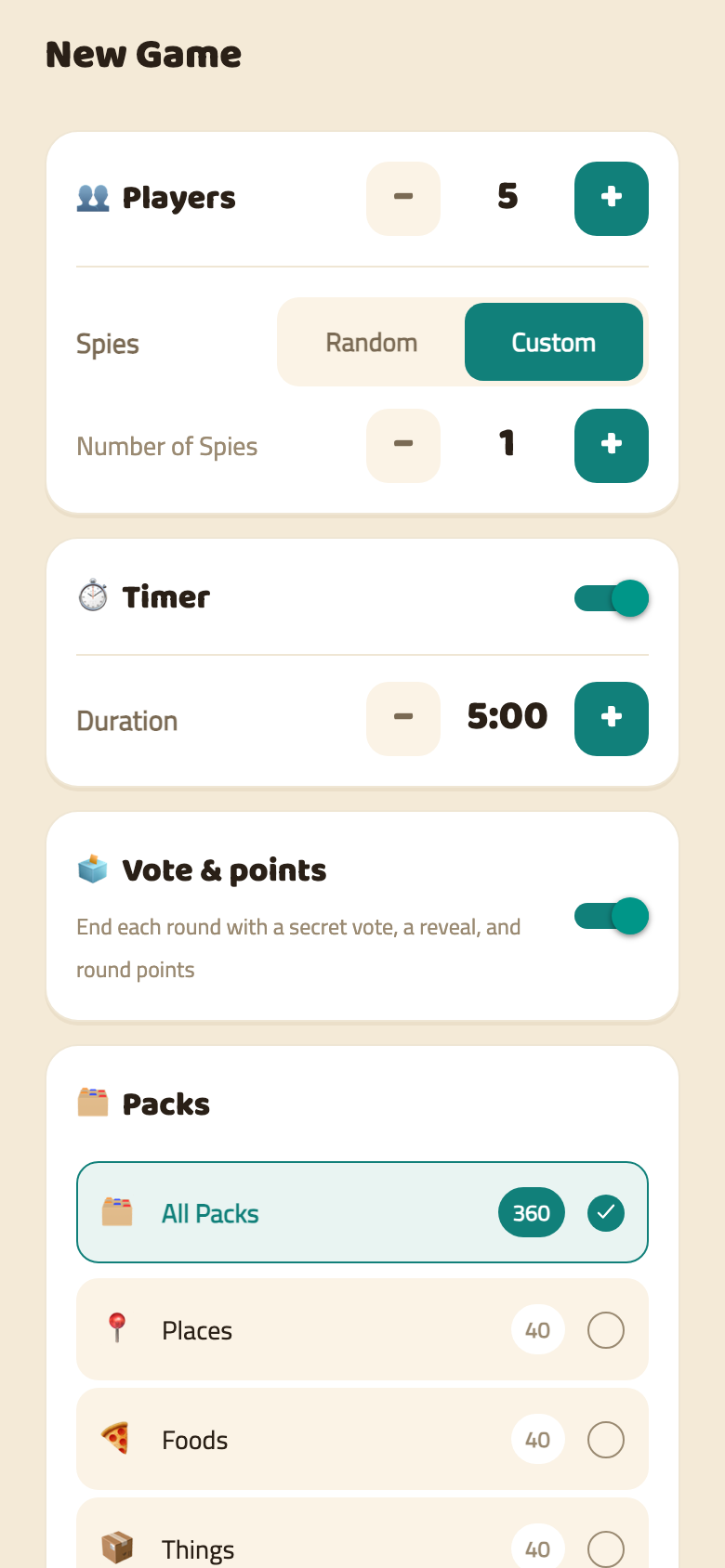
- Pick a pack (Animals, Foods, Places, Professions, Movies, Egyptian Movies, TV Series, Egyptian Series, or Things), or choose All Packs to draw from every one.
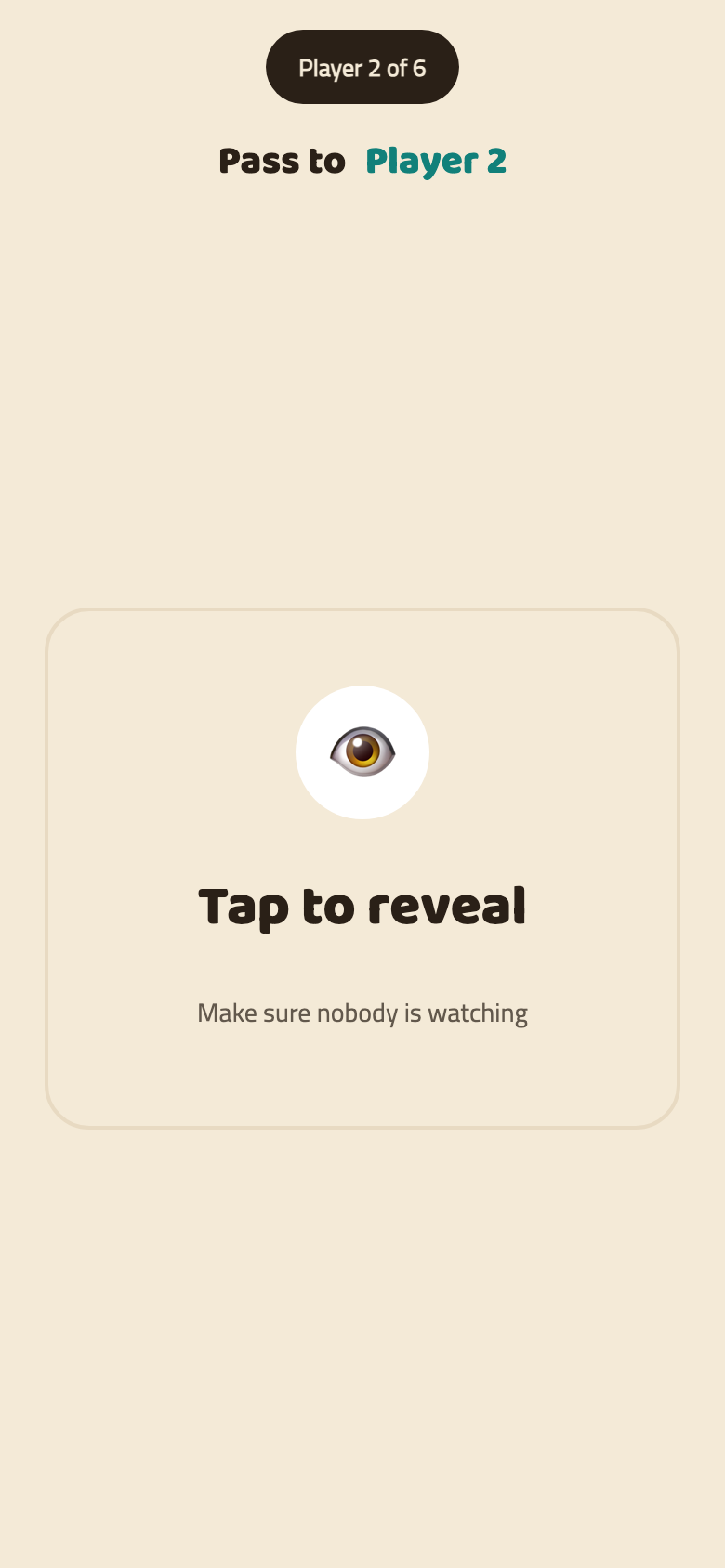
- The app secretly assigns the same word to every player except one — the spy sees that they are the spy but not the word.
- Going around in turn order, each player gives a short, one- or two-word hint about the secret word without saying it outright.
- The spy listens carefully and bluffs a plausible-sounding hint of their own, trying to blend in without knowing the real word.
- After a round (or a set number of hint rounds), open the floor for discussion — question anyone whose hints felt vague or off.
- Vote together on who you think the spy is.
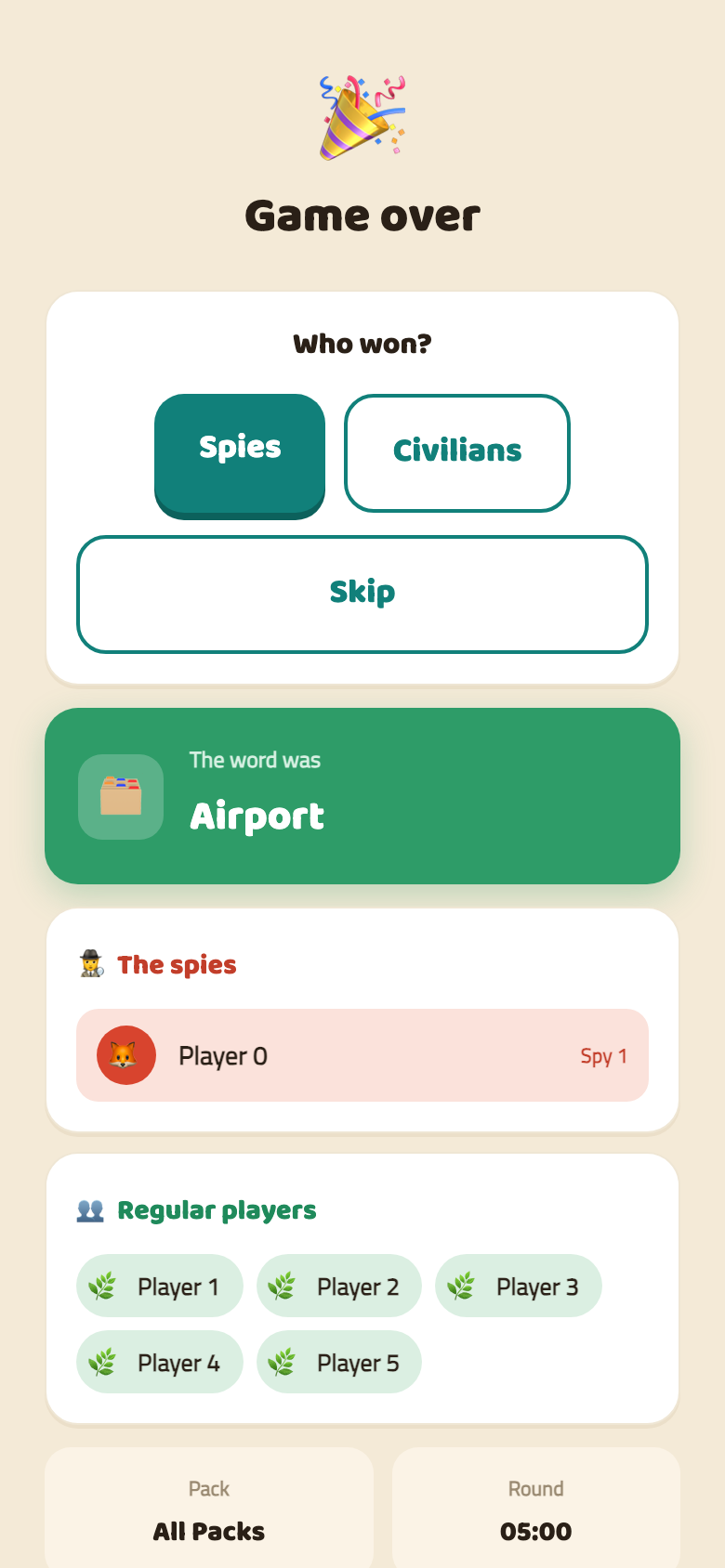
- Reveal the result: the group wins if they vote out the real spy; the spy wins by surviving the vote, or by correctly guessing the secret word if caught.
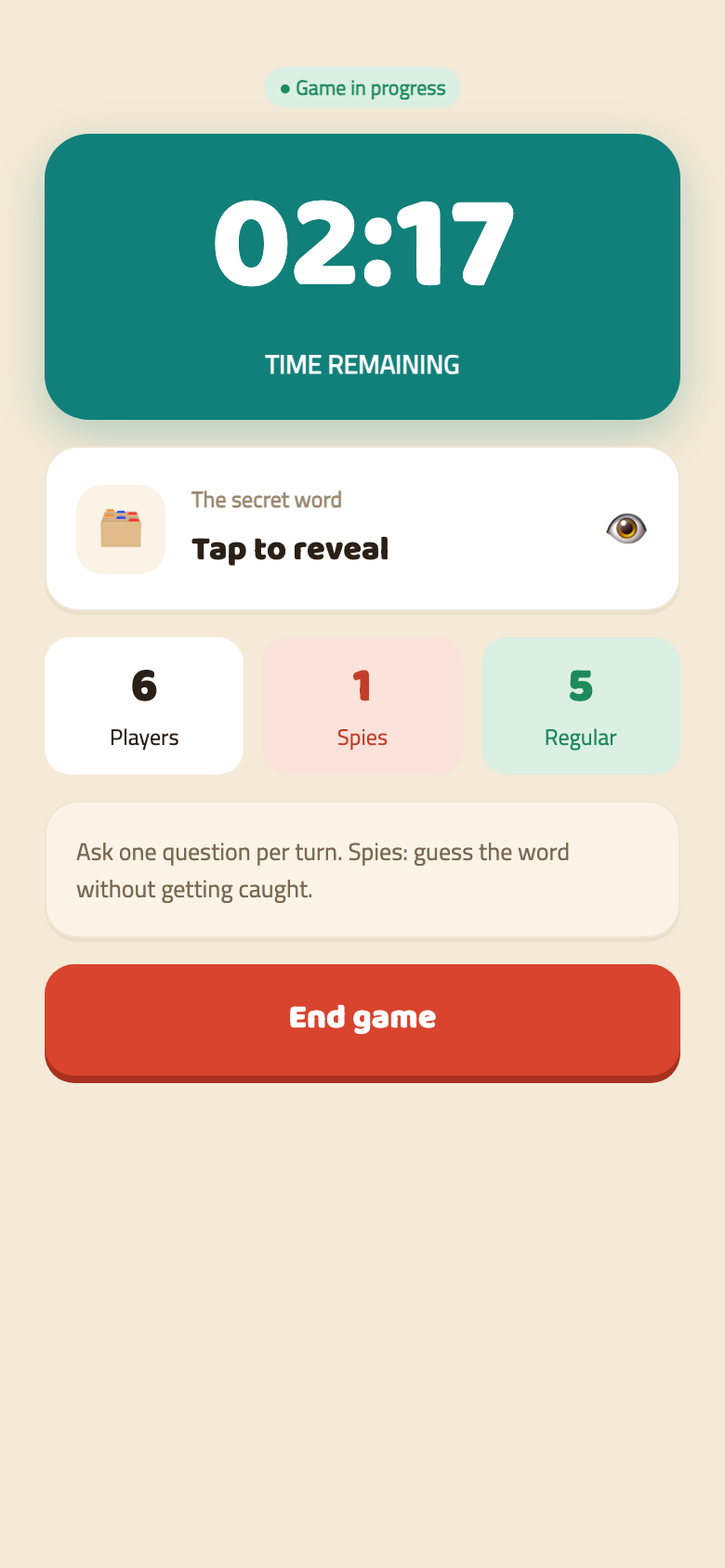
What a Round Looks Like in the App
Tips
- Playing the spy: give a hint vague enough to survive, but specific enough that no one calls you out in the first round.
- Playing a detective: compare hints across players — a spy's hint often fits several possible words, not just one.
- Keep hints to one or two words; long explanations make it easier for the spy to reverse-engineer the secret word.
- Rotate who starts each round so the same player isn't always first or last to give a hint.
- With larger groups (10+), agree on a hint order in advance to keep the round moving quickly.
A Worked Example Round
Five players — Youssef, Mona, Tarek, Salma, and Ahmed — pick the Egyptian Movies pack. The app secretly hands four of them the word El-Lemby (the 2002 Mohamed Saad comedy). Ahmed is the spy: he knows he was picked, but not the word.
- Youssef: He works at a swimming pool.
- Mona: Mohamed Saad plays the lead.
- Tarek: One of the most quoted Egyptian comedies ever.
- Salma: The character talks in scrambled, nonsense phrases.
- Ahmed (the spy, bluffing): It's an old film about a simple guy — vague enough to sound like a real hint, but old doesn't fit a 2002 release, and simple contradicts Salma's scrambled, nonsense line.
Salma pushes back: wait, if he's just a simple guy, why did I just say his lines don't make sense? Tarek notices Ahmed never confirmed Mohamed Saad's name, even after two other players pointed straight at him.
Four of five vote for Ahmed.
Ahmed was the spy. He didn't land a comeback guess, so Youssef, Mona, Tarek, and Salma each score as civilians who caught him.
Voting & Scoring
- Voting is simultaneous: every player, spy included, picks who they think the spy is — nobody sees anyone else's vote until all of them are in.
- A plurality decides the accused. If nobody has a clear top vote, the tied players get a 30-second discussion window, then a single revote restricted to just those tied names.
- If the revote ties again, nobody is eliminated that round and the spy survives by default.
- Scoring: civilians who correctly vote out the spy each earn 2 points; if the spy survives the vote instead, every spy earns 3 points.
- A caught spy gets one comeback guess at the secret word — guessing it right pays out 2 bonus points even though they were caught.
- Points carry across every round in a session. When you end the session, the results screen crowns whoever has the most points as the session champion.
Common Beginner Mistakes
- Going first with a razor-specific hint.
- The first hint sets the ceiling for how vague everyone else can be — naming something too exact hands the spy (and the whole table) too much to work with. Save specifics for round two.
- Accusing on gut feeling alone.
- A hunch isn't evidence. Compare each hint against the full word list from the pack you're using — if a hint fits five different words, that's your tell, not just a feeling.
- Letting the same player go last every round.
- If one seat always talks last, the spy gets a free pass to reverse-engineer the word from everyone else's hints. Rotate who starts each round.
- Skipping the discussion phase.
- Groups that jump straight from hints to a snap vote catch the spy far less often. Even 20–30 seconds of "whose hint felt off?" surfaces more than an instant vote.
- Playing with fewer than 4 people.
- Below 4, one wrong guess flips the whole round. Ghashim technically allows 3, but the deduction only gets interesting once there are enough hints to actually compare.
Rule Variants
Silent Round
Players write their hint on paper (or type it in chat if playing online) instead of saying it aloud, then reveal all hints at once. Removes tone-of-voice tells and forces the vote to rest purely on word choice.
Double Spy
With 8+ players, agree in advance that two spies are hiding instead of one — neither spy knows who the other is. Much harder for civilians, since two people are bluffing independently and might accidentally contradict each other.
Speed Round
Cap each hint at 10 seconds and skip the open discussion — straight from hints to vote. Turns a 10-minute round into a 3-minute one, useful for fitting more rounds into a short session.
How to Play Ghashim: FAQ
How many players do you need for Ghashim?
Ghashim runs with 3 to 20 players in one room, or in an online room if you are playing across devices. Three works technically, but the deduction only gets interesting once there are enough hints to compare — below four, one wrong guess flips the whole round. Somewhere between five and eight is the sweet spot for a first game. Above ten, agree on a hint order in advance so the round keeps moving, and consider the Double Spy variant at eight or more players: two spies hide instead of one, neither knows who the other is, and because they bluff independently they can accidentally contradict each other. A full round takes 5–15 minutes at any size, because every player speaks exactly once per hint round rather than trading questions back and forth.
How does voting and scoring work in Ghashim?
Voting is simultaneous: every player, the spy included, picks who they think the spy is, and nobody sees anyone else's vote until all of them are in. A plurality decides the accused. If nobody has a clear top vote, the tied players get a 30-second discussion window and then a single revote restricted to just those tied names; if that ties again, nobody is eliminated and the spy survives by default. Civilians who correctly vote out the spy each earn 2 points. If the spy survives the vote instead, every spy earns 3 points. A caught spy still gets one comeback guess at the secret word, and guessing it right pays out 2 bonus points even after being caught. Points carry across every round in a session, and the results screen crowns the highest total as session champion.
Can you play Ghashim without internet?
Yes. Ghashim ships a full offline pass-and-play mode that runs an entire round on one phone with no internet at all: the app hands each player their word in turn, they pass the phone on, and the whole hint, discussion and vote cycle happens around the table. One device covers a table of 3 to 20, and nobody else needs to install anything. Online rooms exist for when a group is spread across different places, but they are the addition, not the requirement. That was a deliberate design choice — plenty of real game nights happen with patchy wifi or half the group with no data — and it is one of the clearest differences from Spyfall-style apps, which usually need every player connected in a live lobby for the whole round.
What are the most common mistakes new Ghashim groups make?
Four mistakes account for most lost rounds. The first is opening with a razor-specific hint: the first hint sets the ceiling for how vague everyone else can be, so naming something too exact hands the spy — and the whole table — too much to work with. Save specifics for round two. The second is accusing on gut feeling alone; a hunch is not evidence, so compare each hint against the full word list from the pack you are using, and if a hint fits five different words, that is your tell. The third is letting the same player go last every round, which gives the spy a free pass to reverse-engineer the word from everyone else’s hints — rotate who starts. The fourth is skipping discussion entirely: groups that jump from hints straight to a snap vote catch the spy far less often.